

From Car Lot to Canopy: Breathing New Life into The Dog & Duck
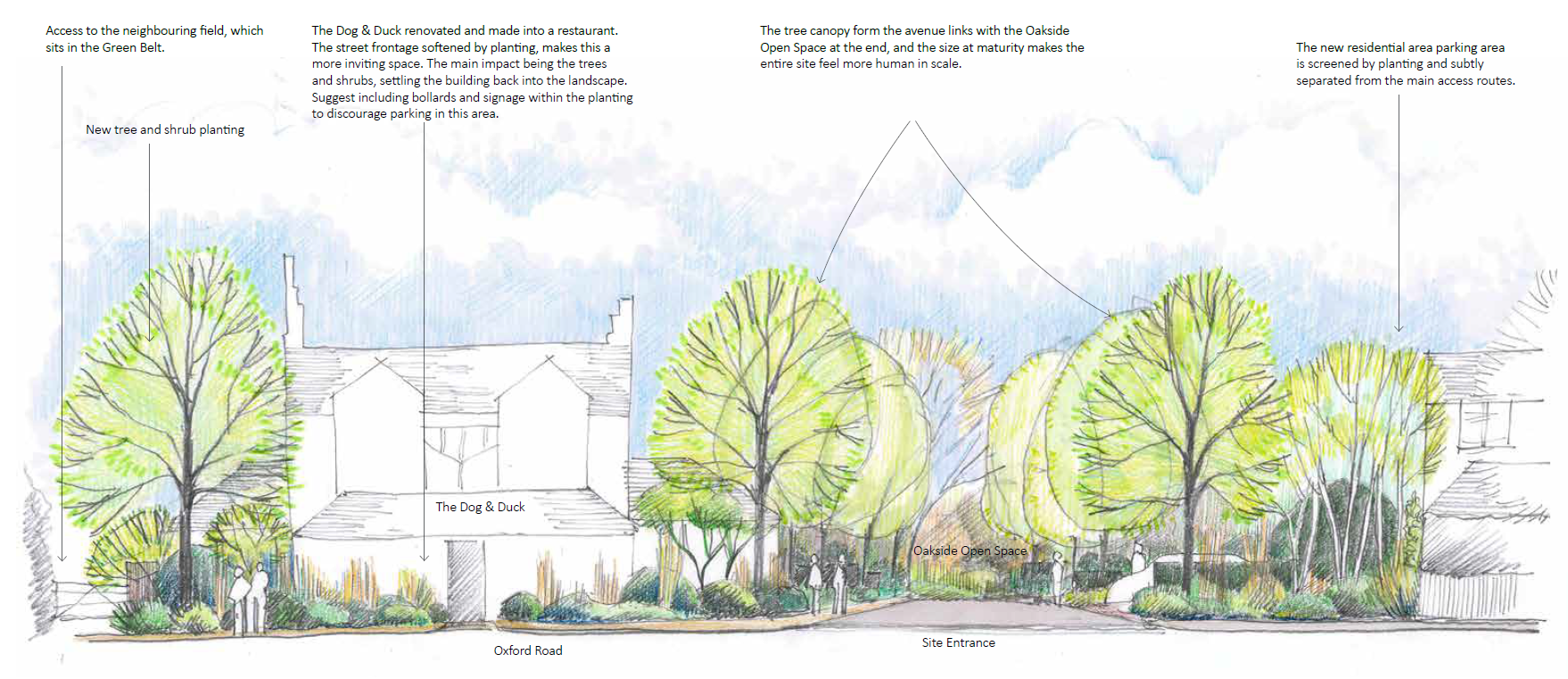
Last month marked an exciting milestone for Austin Design Works Landscape, as part of a wider consultant team, with the successful granting of planning consent for a sensitive and ambitious redevelopment at The Dog & Duck.
Working collaboratively with a highly skilled team, including Torner Architects, Magenta Planning, SLR Consulting, Arboricultural Solutions, Cotswold Archaeology and Arbtech, we supported our client, New Capital Estates, in bringing forward proposals for a former green belt (now grey belt) site. The scheme includes five new family homes alongside the renovation and extension of the listed public house, transforming it into a restaurant with rooms.
This project has been a long time in the making. Over five years, the design team explored multiple options for the site, with Austin Design Works joining around 18 months ago to help shape the landscape vision. Following submission earlier this year, planning consent was granted swiftly, a testament to the strength and clarity of the proposal.
What makes this project particularly rewarding is the transformation at its heart. The site, once used as a second-hand car lot, had become a neglected and visually harsh space, dominated by hardstanding, clutter, and little ecological value. Our vision reimagines it as a green, welcoming edge to the settlement: a richly planted, publicly accessible landscape that connects seamlessly to the adjacent nature reserve.
A key move within the design is the introduction of an avenue of climate-resilient tulip trees. Over time, these will form a strong visual spine through the site, creating a sense of arrival while offering dappled shade in summer and a striking display of golden colour in autumn. Beyond their aesthetic contribution, the trees will play an important role in cooling the microclimate and improving the overall environmental performance of the site.
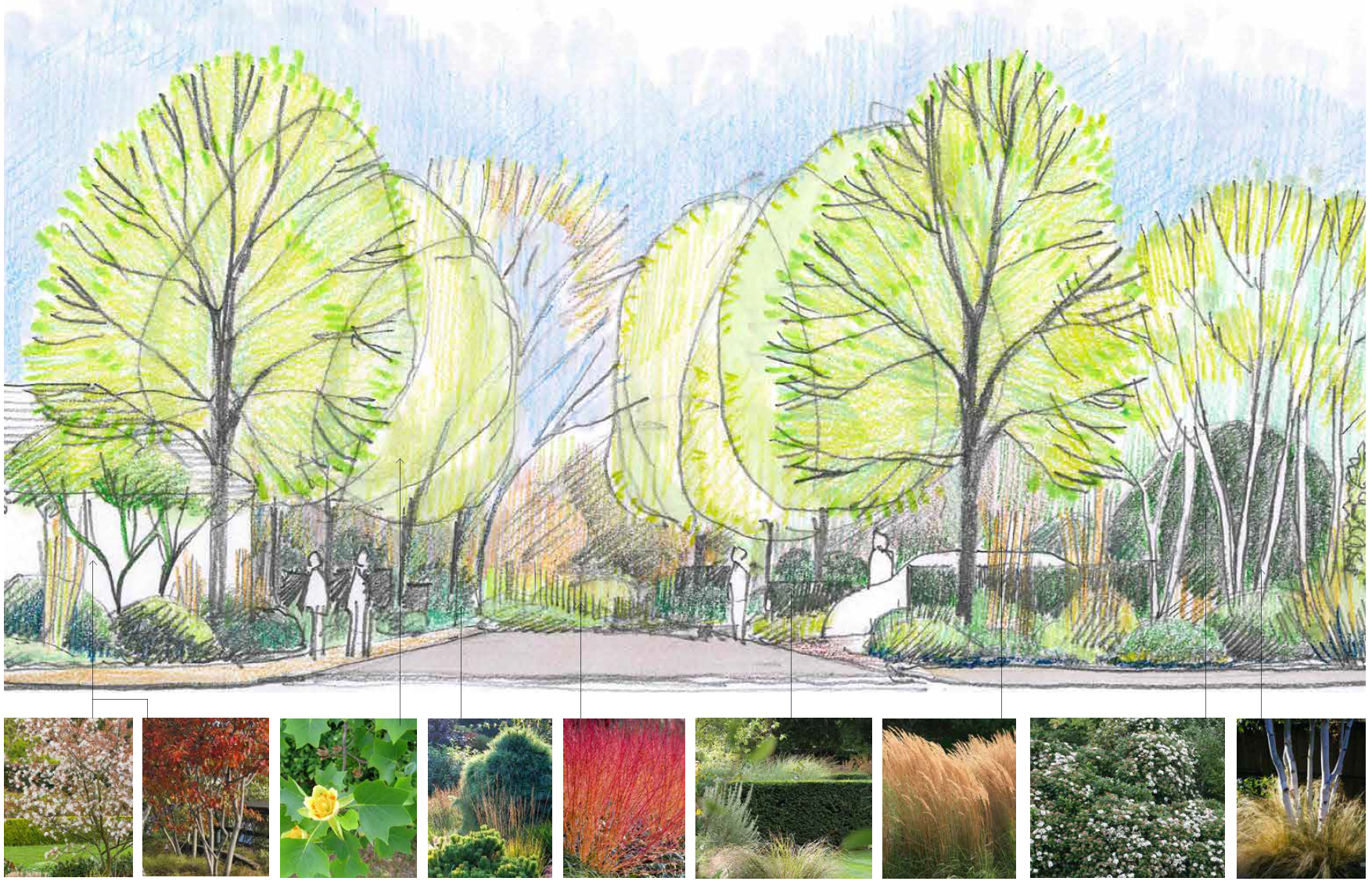
The landscape has been designed not just for visual impact, but for people and nature alike. New spaces for informal play and movement are carefully integrated, while planting is brought right up to the roadside—softening the urban edge and reinforcing a stronger connection to the surrounding green infrastructure. The scheme prioritises pedestrians, with a layout that encourages slower movement and a more human-scale experience.
Biodiversity has been central to the approach throughout. The scheme delivers the majority of its Biodiversity Net Gain on site, supported by additional off-site contributions. Strengthened planting, improved habitat connectivity, and a more diverse landscape structure will ensure the site supports a richer range of species over time.
Ultimately, this project is about repair and renewal, taking a tired, underused site and transforming it into a place that feels rooted in its context, connected to nature, and welcoming to the community. It demonstrates how thoughtful landscape design can play a leading role in shaping not just developments, but the character and experience of place.